

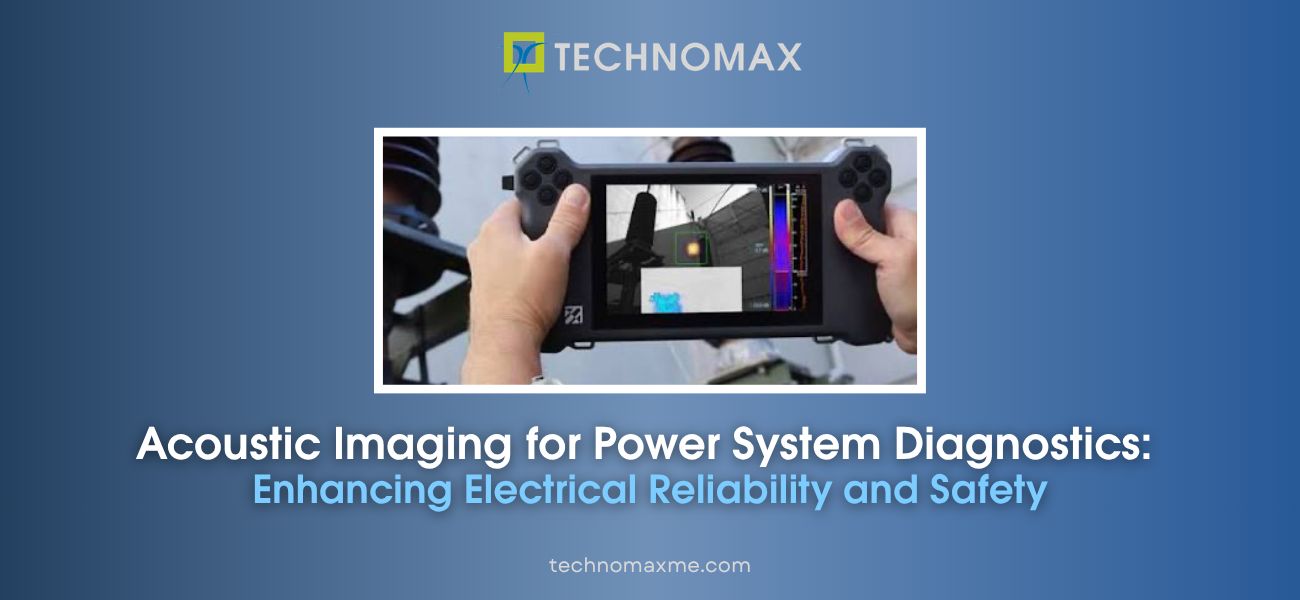
Acoustic Imaging for Precise Power System Diagnostics and Electrical Safety
Acoustic imaging is transforming the way electrical assets are inspected by enabling fast, non-contact detection of hidden faults before they lead to costly failures. Using advanced ultrasonic sensors and real-time acoustic visualization, acoustic imaging cameras can accurately locate issues such as partial discharge, corona, tracking, arcing, and gas leaks in energized equipment.
In today's challenging industrial settings, engineers, technicians, and maintenance teams are under constant pressure to achieve more results with fewer resources. As far as we know, this is where the real challenge begins. Skills and expertise are of course decisive, but what truly sets professionals apart is their ability to bring results that matter, for instance, knowing how to maximise performance, reduce downtime, and bring greater outcomes with limited resources.
So, addressing these challenges faced by the maintenance teams is important. Technologies are evolving well and let us talk about one such innovative technology, the Acoustic Imaging!
Acoustic Imaging technology is changing fast, and so is the way power systems are inspected and kept well, enabling non-contact fault detection that is both reliable and quick. Acoustic technology uses microphone arrays with high-definition optical cameras to capture ultrasonic signatures and locate these sound emissions generated by electrical defects, mostly due to partial discharge, Corona, and arcing.
The high-resolution visual imaging tools equip technicians to foresee potential issues before they become costly failures. By detecting the first signs of faults, acoustic cameras support preventive maintenance strategies, enhance system reliability, ensure the safety of personnel and equipment, and help reduce overall maintenance costs.
So it is evident that acoustic imaging systems have become integral to modern power system diagnostics, facilitating faster inspections and quick diagnostics for industries and enabling more informed maintenance decisions. In this blog, we will explore how acoustic imaging is transforming the industry's reliability game and solving the maintenance challenges that still prevail.
What Is Acoustic Imaging?
Acoustic Imaging is an advanced asset condition monitoring technology that locates, visualises, and maps sound generated by equipment and industrial systems. When considering the conventional methods of manually listening and inspecting sound emissions, these acoustic imagers are way more advanced and faster in diagnosing faults within industrial systems.
In the market, there are handheld ultrasonic detectors and there are physical inspection strategies for these emissions, but they are time-consuming and, at times, impractical. Acoustic imaging converts sound signals to visual images, where the maintenance teams can identify and pinpoint the exact location of faults like compressed air leaks, gas leaks, partial discharge, and other mechanical faults. The colour-coded overlay shows the sound intensity on a live camera image and technicians can quickly see hidden defects. It is particularly beneficial in noisy and hard-to- access areas.
Acoustic beamforming is the actual technology behind acoustic imaging; this is a process that uses an array of highly sensitive microphones to capture sound waves from different directions all at the same time. Advanced technology checks and analyses the small differences in the time and intensity at which sound reaches each microphone, precisely calculating the actual area from which the sound originated.
The results are displayed as a real-time colour-coded acoustic image that portrays areas with problems with high precision. Beamforming is an array-based acoustic evaluation method for quick, one-shot sound source localisation by mapping the relative distribution of sound pressure and sound intensity.
In acoustic imaging, sound intensity mapping helps to get a clear visual representation of how acoustic waves are distributed; this is really beneficial in identifying the exact locations and relative strength of noise sources, enabling faster diagnostics, more accurate fault detection, and helping device troubleshooting tactics even in challenging industrial settings.
How Acoustic Imaging Works in Power System Diagnostics
Beamforming: The Core Technology
Beamforming is the master technology behind the precision relayed by acoustic cameras, enabling them to accurately locate the sound source. As we saw earlier, it uses an array of highly sensitive microphones and the system carefully picks the sound waves arriving from different areas at slightly different times.
Beamforming is a special signal processing technique through which the system takes the data from the microphones and finds out where the sounds actually came from. This relies on how the sound moved through the air. The sound source is found by measuring the minute arrival delays of sound waves at each array of microphones, then converting these data into a visual heatmap.
The sound waves do not reach the set of microphones at the exact same time. This is because the microphones are placed separately; the camera technology calculates the expected time delays from various possible coordinates. Beamforming in the most basic form shifts and adds the sound signals of all the microphones based on the estimated time delays. The processed audio is then changed into a colour-coded real-time optical video feed.
This allows the maintenance teams to catch the fault locations in real-time, making it easy to spot leaks, electrical discharge, and mechanical faults without the lengthy manual inspections.
Sound Detection and Analysis
Acoustic imaging systems detect ultrasonic and a wide range of sound emissions produced by industrial equipment or devices of any sort as part of processes. These imaging systems visualise and localise sound emitted from equipment and processes. This is done by capturing sound frequencies beyond which we human beings can hear; the heat maps are overlaid onto images of the equipment.
It is very intuitive; they can reveal early signs of equipment deterioration before they become serious failures. The images that are obtained as a result are very similar to those of thermal imaging. For instance, a red-coloured area might mean a high level of sound emissions and a blue area indicates lower levels of noise or silent areas.
The technology also identifies abnormalities that cannot be seen during a visual inspection. Hidden air leaks, electrical faults, bearing wear, and other developing issues generate unique acoustic signatures. This is beneficial in many situations; for example, if a machine fails a regulatory requirement due to undetected noise interferences, especially in industrial settings where the noise emissions have typically low frequency content, the human ear cannot locate the noise sources precisely, so it becomes apparent that engineers cannot solve such issues in a short time with reliable results. Acoustic imaging cameras are reliable, intuitive, user-friendly measurement devices for visualising sounds efficiently.
Data Visualisation
One of the key advantages of acoustic imaging is its ability to see acoustic data in a clear visual format. The audio data picked up by the microphone array is sent to a high-performing computer system where the audio data collected is thoroughly processed and the resulting heat maps are generated and sent to users and overlaid on the image of the actual sound source. The detected sound is displayed as a colored acoustic overlay on a live camera image, showing exactly where the sound is starting within the equipment or surrounding area. Usually, red colour means high sound emissions and cooler tones like blue denote zero sound emissions.
This visual representation of acoustics breaks down the complex noise identification, where engineers will be able to separate critical noises from normal operating sounds. The captured images and acoustic data can also be saved for documentation, reporting, and maintenance planning, and future decision-making purposes.
Why Acoustic Imaging Is Important for Power Systems
An electrical power network system that generates, transmits, distributes and handles large-scale electrical energy for commercial or industrial operations needs regular inspections and maintenance to ensure safe, reliable and uninterrupted performance. Even a small fault, if it goes undetected, can become a serious threat that results in safety hazards, equipment damage or operational outages.
There are many reasons as to why the grid or the power systems must be in top condition, such as to ensure safety, improve system dependability to avoid unexpected electrical accidents, or equipment failure. These power systems must be well-conditioned and properly inspected without tedious or invasive techniques. This is where acoustic imaging becomes important.
The following are some of the reasons why acoustic imaging can be game-changing for maintaining power systems:
- Prevents unexpected electrical failures - spots early signs of electrical faults, PD, or air leaks, allowing technicians to adopt correct actions before the damage sets in.
- Enhances personnel safety- acoustic imaging is a non-contact and non-invasive technique, allowing technicians to operate from a safe distance, with no need for close contact with the energised equipment.
- Reduces maintenance costs - early fault identification will prevent last-minute fixes and emergency repairs, helping extend the service life of critical assets and reduce maintenance costs.
- Supports predictive maintenance strategies- acoustic imaging gives condition-based info on assets, which helps maintenance teams to plan repairs or maintenance as part of predictive maintenance.
- Improves system reliability and uptime- acoustic imaging helps to keep electrical assets running efficiently, ensuring a stable power supply and significantly reducing unplanned downtime.
Common Electrical Faults Detected Using Acoustic Imaging
Electrical faults usually don’t just pop up in a day, and they definitely don't just cause plant outages; they escalate and compromise assets, personnel safety and integrity. Partial discharge, arcing or tracking, and many such issues start silently before becoming catastrophic issues. Acoustic imaging will let you catch the faults early and improve asset reliability and performance. Here are some of the common faults that can be found early with acoustic imaging.
1. Partial Discharge (PD)
Partial Discharge (PD) is a localised electrical discharge usually seen when insulation starts to deteriorate, but is not entirely damaged. Insulation defects, moisture ingress, contamination or voids in medium or high voltage equipment components are the main reasons for PD. At first, the PD might appear small, but repeated PD activity will gradually weaken the insulation and even result in equipment damage.
Acoustic imaging, being non-invasive, is ideal to detect ultrasonic emissions at an early stage, helping the technicians and maintenance teams to carry out corrective actions before the damage becomes critical.
2. Corona Discharge
Corona discharge is a continuous localised electrical discharge that occurs when the electric field surrounding a high-voltage conductor ionises the surrounding air without creating a complete electrical arc, causing a faint glow or a hissing sound. Corona discharge occurs due to damaged insulation, contaminated surfaces or loose connections. If left unresolved, it will accelerate insulation damage and deterioration, reducing reliability and may cause long-term equipment damage.
Acoustic imaging helps the maintenance team to locate corona discharge quickly, before the discharge or faults become apparent. This allows for quick identification and prompt fixing of the underlying issues.
3. Arcing Faults
Arcing faults occur when electrical current jumps through air between conductors or from conductor to ground due to any mistake in the insulation, damaged parts, or loose connections.
These faults generate intense heat, ultrasonic sound and energy emissions that can severely damage an asset in a short span of time. Arcing also poses critical safety hazards like fire, permanent equipment damage and safety threats to personnel.
Acoustic imaging helps in non-contact imaging and supports quick identification of arcing activity. This allows the maintenance teams to quickly adopt corrective measures and minimise the damage while improving workplace safety.
4. Tracking and Surface Discharges
Tracking and Surface discharge mainly occur when the electrical current moves across the surface of insulating materials instead of the intended path. Tracking and surface discharge mostly occur due to moisture, dust accumulation, contamination or ageing of insulation that forms a conductive path on the surface. As time passes, these discharges damage insulation and reduce equipment reliability, shortening the asset life.
Acoustic imaging helps maintenance teams spot tracking and surface discharge before they develop into catastrophic issues; this helps maintenance teams address insulation problems before permanent damage occurs.
Benefits of Acoustic Imaging for Electrical Inspections
- Non-Contact Inspection
Acoustic imaging will let technicians and engineers identify electrical faults from a safe distance without physically touching energised equipment. This contributes to improving inspection safety and maintaining accurate fault detection at the same time
- Online Inspection Option
Electrical assets and systems can be inspected while they are in normal operation, which avoids the need for plant or equipment shutdowns. This is particularly beneficial if production cannot be interrupted and to ensure operational continuity.
- Faster Fault Detection
Acoustic imaging quickly finds the location of electrical faults, reducing inspection time and difficulty significantly when compared to conventional methods. Faster diagnostics means faster response to issues before they escalate.
- Increased Safety
When inspections are done from outside hazardous zones, operators' exposure to live electrical components can be avoided. This lowers the risk of electrical accidents and improves workplace safety.
- Cost Savings
Early identification of developing faults helps prevent costly equipment failures, emergency repairs, and unplanned outages. As a result, organisations can reduce maintenance expenses and extend the lifespan of critical assets.
Acoustic Imaging vs Traditional Electrical Inspection Methods
| Features | Acoustic Imaging | Traditional Inspection |
| Real-Time Detection | Yes | Limited |
| Non-Contact Inspection | Yes | Depends on Method |
| Fault Localization | High Accuracy | Moderate |
| Inspection Speed | Fast | Slower |
| Live Equipment Inspection | Yes | Often Limited |
| Safety | High | Moderate |
Combining Acoustic Imaging with Infrared Thermography
Acoustic imaging and infrared thermography are complementary condition monitoring and diagnostic methods that provide a more comprehensive and whole assessment picture of overall electrical equipment health. When acoustic imaging detects ultrasonic emissions produced by developing faults such as partial discharge, corona, arcing, and surface tracking, infrared thermography picks up abnormal temperature patterns or thermal signatures caused by excessive resistance or deteriorating electrical components.
Combining both these techniques together means maintenance teams can detect a wider range of defects with greater precision; this will significantly improve inspection efficiency while avoiding the risk of overlooked issues.
One of the important and key benefits of these approaches combined is the possibility to identify electrical faults through acoustic imaging before they generate immense heat that can be ruled out with infrared thermography. Many insulation defects and partial discharge activities produce ultrasonic emissions way before a significant temperature increase appears on a thermal image.
By integrating both acoustic imaging and infrared thermography inspections, industries can opt for an all-inclusive predictive maintenance strategy that supports early fault detection, reduces unplanned downtime, enhances equipment reliability, and extends the operational life of critical power system assets.
Best Practices for Acoustic Imaging Inspections
To ensure the reliability and precision of acoustic imaging, inspections should be carried out using a structured and strategic approach. The following are some of the established best practices that help improve fault detection accuracy, support predictive maintenance programs, and ensure the long-term reliability and safety of electrical power systems.
- Schedule routine inspections: For best results, conduct inspections at regular intervals to identify developing faults before they lead to equipment failure.
- Inspect during operating conditions: Initiate and perform inspections while equipment is energised and working normally to accurately detect ultrasonic emissions from active electrical faults.
- Use trained personnel: Ensure inspections are only carried out by qualified professionals who can correctly execute and interpret acoustic imaging data and recommend appropriate corrective actions.
- Maintain inspection records and trend analysis: Maintain detailed inspection reports to track and monitor changes in equipment condition and identify fault progression over time.
- Combine with predictive maintenance technologies: Integrate acoustic imaging results with techniques such as infrared thermography, vibration analysis, and ultrasonic testing for a more comprehensive assessment of asset health.
Choosing the Right Acoustic Camera for Power System Diagnostics
Selecting the right acoustic camera is important for accurate electrical fault detection and effective predictive maintenance. As power systems operate in demanding industrial environments, these acoustic imaging cameras should deliver reliable results, precise fault localisation, and intuitive reporting capabilities. Keeping the following features before choosing the ideal acoustic camera will help ensure the instrument meets both inspection and maintenance requirements.
- Key Features to Consider - Choose an acoustic camera that gives high-resolution acoustic imaging, real-time sound source localisation, and advanced analysis functions. Also look for features such as automatic fault detection, image overlays, and intuitive software that can improve inspection accuracy and transform maintenance activities.
- Sensitivity and Frequency Range- The camera should have high acoustic sensitivity and a wide ultrasonic frequency range to detect even the weakest, most subtle sound emissions produced by faults such as partial discharge, corona, arcing, and tracking. The greater the sensitivity, the earlier the fault identification, even in electrically noisy environments.
- Detection Distance- An effective acoustic camera should accurately detect faults from a safe working distance without compromising image quality. Long-range detection is especially important when inspecting high-voltage equipment, elevated installations, or locations with restricted access.
- Reporting and Analysis Capabilities- Comprehensive reporting tools make it easier for inspection documentation and support informed maintenance decisions. Cameras with built-in data storage, customisable reports, trend analysis, and cloud or software integration help maintenance teams continuously monitor equipment condition and eventually facilitate comparison.
- Ease of Use in Industrial Environments -Industrial inspections require equipment that is durable, portable, and easy-to-use in challenging conditions. A lightweight design, user-friendly interface, long battery life, and rugged construction will help the engineers and process inspectors to do efficient surveys with minimal operational disruptions.
How SONASCREEN Acoustic Cameras Support Power System Diagnostics
SONASCREEN acoustic cameras with their non-intrusive design and intuitive features have transformed industrial maintenance by enabling faster and safer fault detection. Instead of relying on time-consuming inspection methods, maintenance teams can quickly locate issues while equipment remains operational, allowing them to focus on timely corrective actions and improve overall maintenance efficiency.
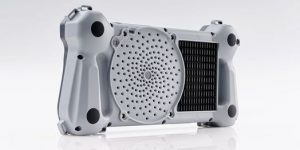
Designed for industrial inspections and predictive maintenance, the SONASCREEN® 2 acoustic technologies help maintenance teams identify faults early, reduce unplanned downtime, and improve inspection efficiency. Key features include:
- 176 high-sensitivity sealed microphones capture acoustic signals with exceptional precision and support sampling rates of up to 200 kHz, making it possible to accurately pinpoint even low-intensity sound sources.
- Compact and lightweight construction with an ergonomic design allows operators to comfortably perform inspections for extended periods without excessive fatigue.
- Four pre-configured operating modes simplify setup and measurement, enabling users to carry out inspections quickly while minimising the learning curve.
- High-speed imaging of up to 100 frames per second (fps), combined with a global shutter, provides accurate visualisation of rapidly changing or moving acoustic events.
- Wide frequency range extending to 100 kHz enables reliable detection of both audible sounds and ultrasonic emissions, even in challenging industrial environments with high background noise.
- Rugged IP54-rated housing offers protection against dust and water splashes, while the sealed microphone array ensures dependable operation in harsh industrial conditions.
- Comprehensive recording and analysis functions allow raw acoustic data to be stored for detailed offline evaluation, documentation, and report generation.
- Eight customizable function buttons provide quick access to commonly used controls, streamlining inspections and improving overall workflow efficiency.
- A 7-inch HD multi-touch display delivers a sharp, user-friendly interface for monitoring acoustic images in real time and managing system settings with ease.
Future of Acoustic Imaging in Electrical Maintenance
As industries and industrial processes continue to evolve, and now with digital transformation, acoustic imaging is becoming an integral part of routine electrical maintenance and power systems upkeep. The industry's latest: Integration with Industry 4.0 technologies lets acoustic cameras connect with digital maintenance platforms, where the inspection data can be captured, stored, and shared easily across connected systems. This improves accessibility and visibility into asset health and supports more informed maintenance planning.
The future of acoustic imaging in electrical inspection and maintenance is also greatly influenced by AI-aided fault identification, where smart systems and algorithms can automatically pick patterns, improvise and prioritise maintenance tasks. Remote monitoring capabilities are yet another decisive element; when integrated with the maintenance systems, technicians can assess equipment conditions from off-site locations, reducing the need for frequent manual inspections.
Predictive analytics is another promising technology, which uses historical and real-time acoustic data to forecast or predict potential equipment failures, helping organisations schedule maintenance proactively, minimise downtime, and extend the lifespan of critical electrical assets.
Frequently Asked Questions (FAQs)
- What is acoustic imaging in electrical inspections?
Acoustic imaging is a non-contact inspection method that uses an array of microphones to detect and visualise sound produced by electrical equipment. It helps maintenance teams to locate issues such as air leaks, partial discharge, and mechanical faults before equipment fails.
2. Can acoustic cameras detect partial discharge?
Yes. Acoustic cameras can perfectly detect ultrasonic emissions generated by partial discharge. They allow inspectors to quickly identify the source of the discharge, even in complex electrical installations. This helps in early intervention before insulation damage worsens.
3. How far can an acoustic camera detect electrical faults?
The detection range depends on factors such as the camera model, sound intensity, background noise, and environmental conditions. Under suitable conditions, many industrial acoustic cameras can detect sound sources from several metres away, allowing inspections to be carried out at a safe distance.
4. Is acoustic imaging safe for energised equipment inspections?
Yes. Acoustic imaging is a non-contact technology, enabling inspections to be performed from a safe distance while equipment remains energised. This reduces the need for direct interaction with live electrical components and minimises operational disruptions.
What is the difference between acoustic imaging and thermal imaging?
Acoustic imaging detects sound waves, including ultrasonic emissions from faults such as partial discharge and compressed air leaks. Thermal imaging detects temperature variations that indicate overheating or abnormal heat generation. Together, these technologies provide a more comprehensive assessment of equipment condition.
How often should power systems be inspected using acoustic imaging?
Inspection frequency depends on the equipment's criticality, operating conditions, and maintenance strategy. Most facilities include acoustic imaging in routine preventive or predictive maintenance programs, with more frequent inspections for high-value or high-risk assets.
5. What are acoustic cameras used for?
Acoustic cameras are used to detect and locate sound-related faults in industrial systems. Common applications include identifying partial discharge, compressed air and gas leaks, vacuum leaks, mechanical wear, and other abnormalities that may affect equipment performance and reliability.
6. What is an acoustic imaging camera?
An acoustic imaging camera is an inspection device that combines multiple microphones with a digital camera to create a visual representation of sound. This allows users to pinpoint the exact location of sound sources quickly and accurately during maintenance inspections.
7. How much does an acoustic camera cost?
The cost of an acoustic camera varies depending on its features, microphone array, frequency range, software capabilities, and intended application. Entry-level models are generally more affordable, while advanced industrial systems with enhanced analysis features are priced higher. Contacting the manufacturer or supplier is the best way to obtain an accurate quotation.
8. What is the difference between a thermal camera and an acoustic camera?
A thermal camera identifies temperature differences by detecting infrared radiation, making it useful for finding overheating components. An acoustic camera detects audible and ultrasonic sound emissions to locate issues such as partial discharge, air leaks, and mechanical defects. Using both technologies together provides a more complete picture of equipment health.

Recent Blogs

Get Started Now!
It takes less than a minute of your time. Or you may simply call +971 2 555 1 783