


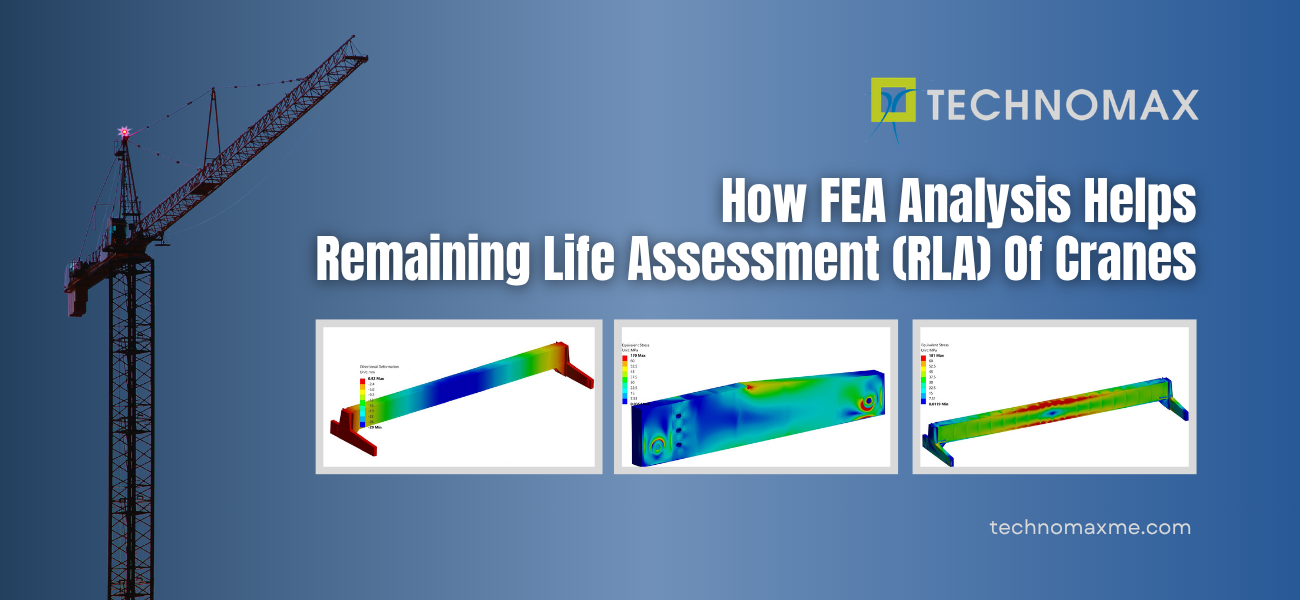
Crane Remaining Life Assessment (RLA): How FEA Analysis Helps Assess the Remaining Life of Cranes
Cranes are critical assets in industrial facilities, ports, manufacturing plants, oil and gas facilities, and other heavy-duty environments. As a crane gets older or operates under demanding conditions, one of the most important questions for asset owners is: Can the crane continue operating safely, and how much service life does it have remaining?
A Crane Remaining Life Assessment (RLA) helps answer this question by evaluating the current condition of the crane, its operating history, structural condition, and fatigue risks. The assessment provides a technical basis for deciding whether a crane should continue operating, undergo repairs or modifications, or be considered for replacement.
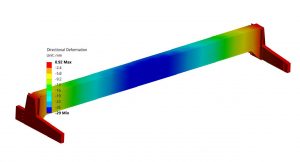
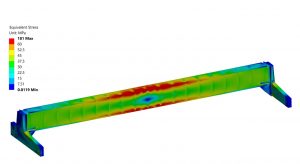
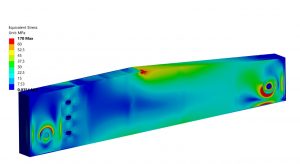
For complex or heavily loaded crane structures, Finite Element Analysis (FEA) can provide valuable engineering insight into structural behaviour, stress distribution, deformation, and areas that may require further investigation.
What Is Crane Remaining Life Assessment?
Crane Remaining Life Assessment is a structured engineering assessment used to estimate the safe service life remaining in a crane under its actual operating conditions.
The assessment can consider:
- Current structural condition
- Inspection findings
- Crane duty history
- Operating loads
- Lifting frequency
- Previous repairs
- Structural defects and crack history
- Fatigue considerations
The objective is not simply to determine the age of a crane. Instead, it is to understand its actual structural condition and remaining service capability and provide a practical basis for maintenance, repair, life extension, or replacement decisions.
Why Is FEA Analysis Important for Crane Assessment?
A crane structure is exposed to different combinations of lifting loads, operating conditions, dynamic effects, and repeated loading cycles. Over time, these loads can contribute to stress concentration and fatigue in critical structural components.
FEA analysis can help engineers evaluate how a crane structure responds to defined loading conditions.
Depending on the assessment requirements and available engineering data, FEA can be used to investigate:
- Structural stress distribution
- Deformation and displacement
- Highly loaded structural areas
- Stress concentration locations
- Load-bearing behaviour
- Structural integrity under defined load cases
- Areas requiring further inspection or engineering attention
The results can complement physical inspection and other engineering assessments when determining whether continued operation or life extension is appropriate.
When Should You Consider a Crane Remaining Life Assessment?
An RLA may be particularly relevant when:
1. The Crane Is Approaching Its Design Working Period
Older cranes may require a detailed assessment to determine whether they can safely continue operating beyond their original design working period.
2. The Crane Has a History of Repairs
Repeated weld repairs, cracks, or recurring structural defects can indicate areas that require closer engineering evaluation.
3. Operating Conditions Have Changed
An increase in duty cycles, lifting frequency, or operating loads can affect the structural demands placed on a crane.
4. You Are Considering Life Extension
Before investing in major repairs or replacing an existing crane, an engineering assessment can provide a defensible basis for deciding whether extending its service life is practical.
5. An Audit or Compliance Review Is Required
RLA can also support asset transfer, insurance reviews, major audits, and compliance verification.
How Technomax Approaches Crane Structural Assessment
At Technomax Middle East Engineering LLC, crane assessment can be approached by combining available engineering information with structural evaluation and analysis.
The assessment process can include reviewing:
- Crane design drawings
- Inspection reports
- Previous repair records
- Operating profile
- Loading conditions
- Structural condition
- Historical defects
Where appropriate, engineering analysis such as Finite Element Analysis (FEA) can be used to understand structural response under defined loading conditions.
The assessment can then help translate technical findings into practical recommendations for operations, maintenance, and asset investment decisions. The RLA methodology outlined in the technical document similarly emphasizes reviewing drawings, inspections, repair history, and operating profiles before applying appropriate engineering and fatigue assessment methods.
What Can a Crane Life Assessment Help You Determine?
A properly structured assessment can provide a clearer basis for decisions such as:
Continue Operation → Repair → Retrofit → Life Extension → Replacement
Depending on the findings, the deliverables may include:
- Structural fitness and remaining-life assessment
- Recommended operating limits and risk controls
- Prioritized inspection and monitoring requirements
- Repair or retrofit recommendations
- Life-extension roadmap
- Engineering documentation for management and stakeholder review
This helps asset owners move away from decisions based solely on crane age and towards evidence-based asset management.
Benefits of Crane Remaining Life Assessment
A detailed assessment can help organizations:
Reduce Operational Risk
Early identification of structural and fatigue-related risks can support proactive intervention before problems become critical.
Extend Asset Value
If the crane remains suitable for continued operation, evidence-based life-extension planning can help avoid unnecessary replacement.
Improve Maintenance Planning
Assessment findings can support planned inspections, repairs, and interventions rather than reactive breakdowns.
Support Compliance
RLA documentation can support engineering justification aligned with recognized frameworks and applicable crane standards, including ISO 12482, FEM, and CMAA, where applicable.
Make Better Replacement Decisions
A technical assessment can help management compare the risks and costs of extending an existing crane's life against replacing the asset.
FEA Analysis and Crane Life Assessment: A Practical Combination
FEA should not be viewed as a replacement for physical inspection or operational history. Instead, it can form part of a broader engineering assessment.
For example, inspection findings may identify a potentially critical structural area, while FEA can help engineers understand the stress and deformation behaviour associated with relevant loading conditions.
Combining inspection data + operating history + engineering assessment + FEA, where appropriate, can provide a stronger technical basis for crane life-extension decisions.
Why Choose Technomax?
Technomax focuses on delivering decision-ready engineering outcomes rather than simply providing technical data.
Our approach is designed to connect engineering findings with the practical requirements of:
- Safety
- Asset reliability
- Maintenance planning
- Compliance
- Business continuity
- Cost control
The objective is to provide recommendations that engineering, operations, and management teams can understand and act upon.
Find the Remaining Life of Your Crane with Technomax
Is your crane aging, heavily utilized, or showing signs of structural wear? Don't replace it based on age alone.
Technomax can support a Crane Remaining Life Assessment with appropriate engineering analysis, including FEA where required, to help determine the structural condition and support informed life-extension, repair, retrofit, or replacement decisions. We also offer all type of crane installation and maintenance services, crane inspection services and more.
Want to know how much service life your crane has remaining?
Contact Technomax today to discuss your crane's condition, operating profile, FEA services and life-assessment requirements.

Recent Blogs



Get Started Now!
It takes less than a minute of your time. Or you may simply call +971 2 555 1 783