


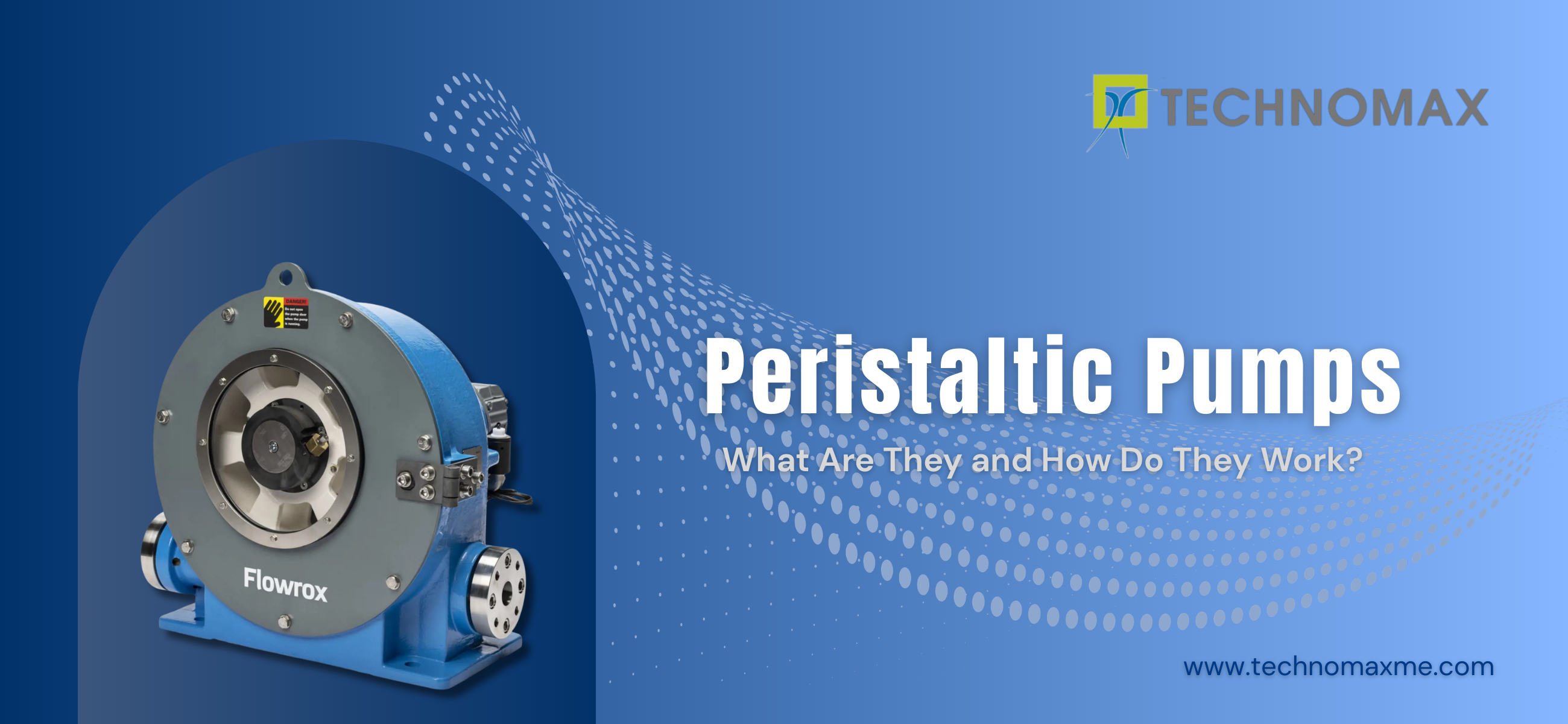
Peristaltic Pumps: What Are They and How Do They Work?
Peristaltic pumps belong to the category of positive displacement pumps and are known for their flexibility and dependable performance. These pumps can transfer a wide range of fluids while handling them gently. Because of these characteristics, peristaltic pumps are widely used in sectors such as healthcare, pharmaceuticals, chemical processing, food production, and wastewater treatment. They are especially valued for their ability to move viscous, abrasive, or particle-containing fluids efficiently.
This article explains the concept of peristaltic pumps, how they function, their key components, and the advantages and applications they offer across different industries.
What is a Peristaltic Pump?

Get Quote
A peristaltic pump is a type of positive displacement pump that moves fluid through a flexible tube or hose. The operation is based on a principle called peristalsis, where repeated squeezing and releasing of the tube pushes the fluid forward.
The idea of peristalsis originally comes from biology, specifically the way muscles in the digestive system move food through the body. Engineers later adopted this concept to create pumping systems. The first practical versions of peristaltic pumps appeared during the 20th century and have since evolved to provide improved speed, control, efficiency, and durability. Today, these pumps are widely used in laboratories and industrial environments.
Thanks to their ability to prevent contamination and handle delicate or thick fluids, peristaltic pumps are used in many applications, including:
- Dialysis equipment
- IV infusion devices
- Pharmaceutical production
- Chemical manufacturing
- Food and beverage processing
- Paint and coating industries
- Biotechnology and life sciences
- Analytical and laboratory instruments
- Research laboratories
- Wastewater treatment systems
- Environmental sampling operations
Working Principle of a Peristaltic Pump
The term peristalsis refers to the wave-like muscle contractions that move substances through the digestive tract. Peristaltic pumps replicate this natural movement to transport liquids through flexible tubing.
https://youtu.be/Cj8kYz8a2M4
Instead of muscles, these pumps use rollers or shoes mounted on a rotating rotor. As the rotor turns, the rollers compress the flexible tube and then release it. This sequence creates a wave-like motion that pushes the fluid along the tube.
A key advantage of this design is that the liquid only contacts the inner surface of the tubing and does not touch the pump’s internal mechanical components. This makes peristaltic pumps ideal for sterile or contamination-sensitive applications.
Operational Cycle
The operation of a peristaltic pump involves three main stages: compression, restoration, and fluid transfer.
1. Compression
- Rollers attached to the rotor move along the flexible tube.
- These rollers press against the tubing, flattening it and creating a sealed section.
- The compressed section prevents backflow and traps a small amount of fluid inside the tube.
- This forms isolated pockets of liquid between the rollers.
2. Restoration
- As the rotor continues turning, the rollers move past the compressed area.
- The tube returns to its normal round shape due to its flexible material.
- This expansion creates a vacuum inside the tube, drawing more liquid from the inlet.
3. Fluid Movement
- The trapped fluid pockets are pushed forward toward the outlet.
- At the same time, new fluid enters the tube from the inlet side because of the vacuum created during expansion.
- This repeated process produces a steady flow of liquid.
4. Continuous Operation
The rotor keeps rotating, allowing the compression and release cycle to continue. Multiple rollers are typically used to maintain consistent pressure and ensure uninterrupted fluid flow.
The efficiency of the pump depends greatly on the quality and flexibility of the tubing, as well as the precise alignment of the rollers.
Step-by-Step Guide to Using a Peristaltic Pump Efficiently
Setup
- Install the pump securely on a stable surface or integrate it into the system.
- Choose the appropriate tubing size and material depending on the fluid being pumped.
- Insert the tube into the pump head and align it correctly.
- Connect the inlet and outlet lines and ensure tight connections to prevent leakage.
Priming
- Before starting the pump, the tube may need to be filled with fluid manually.
- This removes trapped air and ensures smooth pumping.
- Confirm that all fittings and valves are correctly installed.
Operation
- Turn on the power supply.
- Adjust the flow rate using the control interface.
- Monitor the pump during the initial run to ensure everything functions properly.
Maintenance
- Inspect the tubing periodically for signs of wear or damage.
- Replace the tubing when necessary.
- Follow the manufacturer’s guidelines for cleaning and maintenance to maintain efficiency and extend service life.
Types of Peristaltic Pumps
Hose Pumps
Hose pumps use reinforced hoses designed to withstand higher pressures and abrasive fluids. They are commonly used in demanding industrial environments but can be more expensive to maintain when hoses need replacement.
Tube Pumps
These pumps use smaller, flexible tubes that are easier and cheaper to replace. Tube pumps are commonly used in laboratories, medical devices, and food processing applications where lower flow rates are required.
Single Roller Pumps
Single roller pumps compress the tube using one roller or shoe. They produce a pulsed flow and are suitable for applications that require intermittent dosing.
Multiple Roller Pumps
These pumps use two or more rollers to compress the tube. The multiple compression points help create a smoother and more continuous fluid flow.
Portable Peristaltic Pumps
Portable pumps are lightweight and compact, making them ideal for fieldwork and on-site operations. Many models operate on batteries or support both AC and DC power sources.
Stationary Peristaltic Pumps
Stationary pumps are larger systems designed for fixed industrial installations. They typically operate using a constant AC power supply and are used in large-scale processing systems.
Advantages of Peristaltic Pumps
Contamination-Free Operation
Since the fluid only flows through the tubing, there is minimal risk of contamination from the pump mechanism. This is essential in sterile processes.
Self-Priming Capability
Many peristaltic pumps can start pumping without pre-filling the system, simplifying startup procedures.
Handling of Viscous Fluids
These pumps can move fluids with varying viscosities, from thin liquids to thick slurries, without damaging them.
Low Maintenance Requirements
The tubing is usually the only component that needs regular replacement, making maintenance simple and cost-effective.
Reversible Flow
Most designs allow the pump to run in reverse, offering flexibility in different applications.
Precise Flow Control
Peristaltic pumps can deliver accurate and controlled flow rates, which is particularly important in medical dosing and laboratory experiments.
Importance of Peristaltic Pumps Across Industries
Peristaltic pumps play a crucial role in many industries due to their reliability and clean operation.
Contamination Control
These pumps ensure hygienic fluid transfer because the liquid only contacts the tubing. This feature is especially valuable in pharmaceutical and food industries where purity is critical. Tubing materials can also be sterilized through methods such as autoclaving, gamma radiation, or ethylene oxide treatment.
Chemical Dosing
In mineral processing and water treatment, peristaltic pumps are often used to deliver flocculants and chemical reagents. Because they operate with low shear force, they prevent damage to delicate polymer chains, improving chemical efficiency and reducing costs.
Accurate Flow Regulation
Industries such as pharmaceuticals, chemical processing, and food manufacturing rely on peristaltic pumps for precise fluid dosing and consistent flow rates.
Self-Priming and Dry Running
These pumps can operate even when dry without damaging internal components. This allows quick startup and improves operational flexibility.
Chemical Compatibility
Peristaltic pump tubing is available in materials such as silicone, Viton, and Tygon, which are resistant to many chemicals. This ensures durability and reliability in harsh processing environments.
Valmet Flowrox™ LPPT Peristaltic Pump: Reliable Solution for Heavy-Duty Fluid Handling
The Valmet Flowrox™ LPPT Peristaltic Pump is a heavy-duty industrial pump designed for reliable transfer of abrasive, corrosive, and high-viscosity fluids in demanding process environments. Built with advanced peristaltic pumping technology, the pump operates by compressing a reinforced hose to move media efficiently while preventing direct contact between the fluid and mechanical components, minimizing wear and contamination risks.
This design ensures low maintenance requirements, reduced downtime, and extended hose life compared to conventional pumping systems. The Flowrox™ LPPT pump is widely used in industries such as mining, chemical processing, wastewater treatment, and construction due to its ability to handle solids, sludge, and aggressive chemicals with consistent flow accuracy. Its robust structure, energy-efficient operation, and easy maintenance make it a dependable solution for continuous industrial applications where durability and performance are critical.
Get Valmet Peristaltic Pumps in UAE from Technomax
Looking for peristaltic pumps in the UAE? Technomax is recognized as a trusted supplier of valmet's high-quality peristaltic pumps in UAE and Middle East. The company focuses on providing equipment that delivers durability, precision, efficiency, and dependable performance. Their pumps are widely used across various industries due to their reliability and engineering quality.
In addition to peristaltic pumps, Technomax also supplies a broad range of industrial solutions, including AODD (Air Operated Double Diaphragm) pumps, ultrasonic testing equipment, and industrial filtration systems. These products are designed to support the diverse operational requirements of businesses throughout UAE and the wider MENA region.

Recent Blogs


Get Started Now!
It takes less than a minute of your time. Or you may simply call +971 2 555 1 783